
Hello everyone,
Estimating infrastructure costs is a key step when designing cloud-native architectures. In environments that rely on Kubernetes, understanding the cost impact of compute, networking, and storage components becomes especially important.
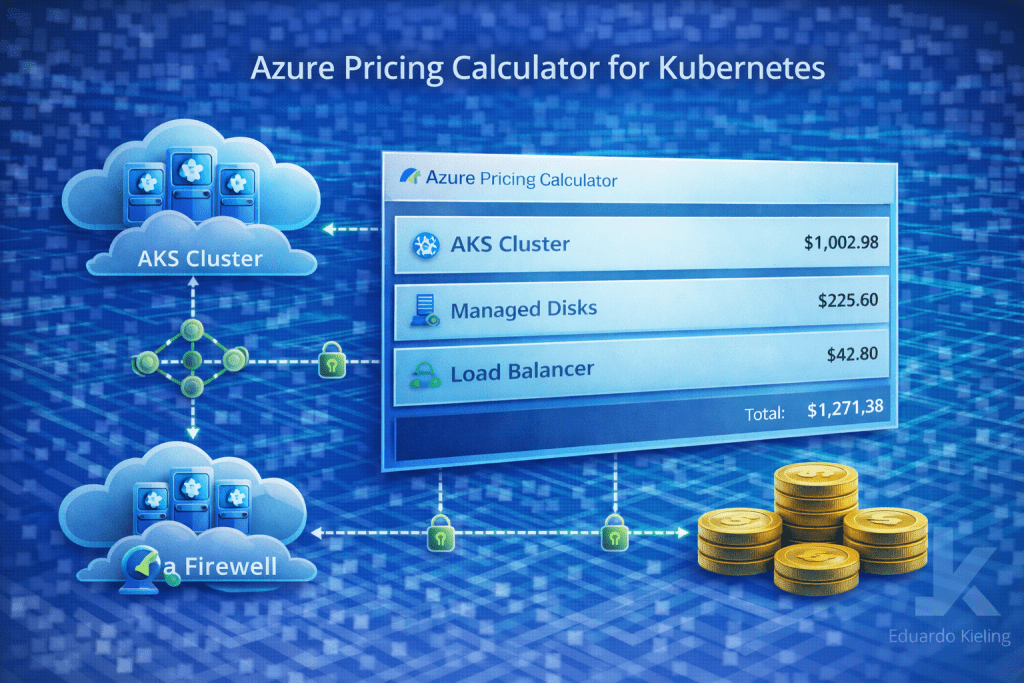
The Azure Pricing Calculator provides a practical way to estimate the expected costs of running Kubernetes-based workloads in Azure before resources are deployed.
Estimating costs for Kubernetes workloads
When designing architectures based on Azure Kubernetes Service (AKS), several components contribute to the overall cost of the platform. These typically include:
- Virtual machine nodes used by the Kubernetes cluster
- Managed disks for persistent storage
- Load balancers and networking resources
- Outbound traffic and public endpoints
The Azure Pricing Calculator allows architects to simulate these components and estimate the monthly cost of running the environment.
Modeling cluster capacity
A common approach is to begin by defining the expected node pool configuration. This includes selecting the VM size, number of nodes, and the expected region where the cluster will run.
From there, additional services such as storage, networking, or monitoring can be added to refine the cost estimation.
This process helps teams understand how scaling the cluster or selecting different VM sizes can influence operational costs.
Supporting architectural decisions
Beyond simple cost estimation, the pricing calculator also helps compare different design approaches. For example, teams can evaluate the impact of using larger VM sizes versus increasing the number of nodes.
This visibility supports better architectural decisions early in the design phase, especially for organizations building cloud-native platforms at scale.
Final thoughts
The Azure Pricing Calculator is a useful tool for planning Kubernetes-based architectures in Azure. By modeling cluster configurations and associated services, architects can better understand the financial implications of their design choices before deployment.
For teams adopting cloud-native workloads, incorporating cost estimation into the architecture process helps create more predictable and sustainable cloud environments.