
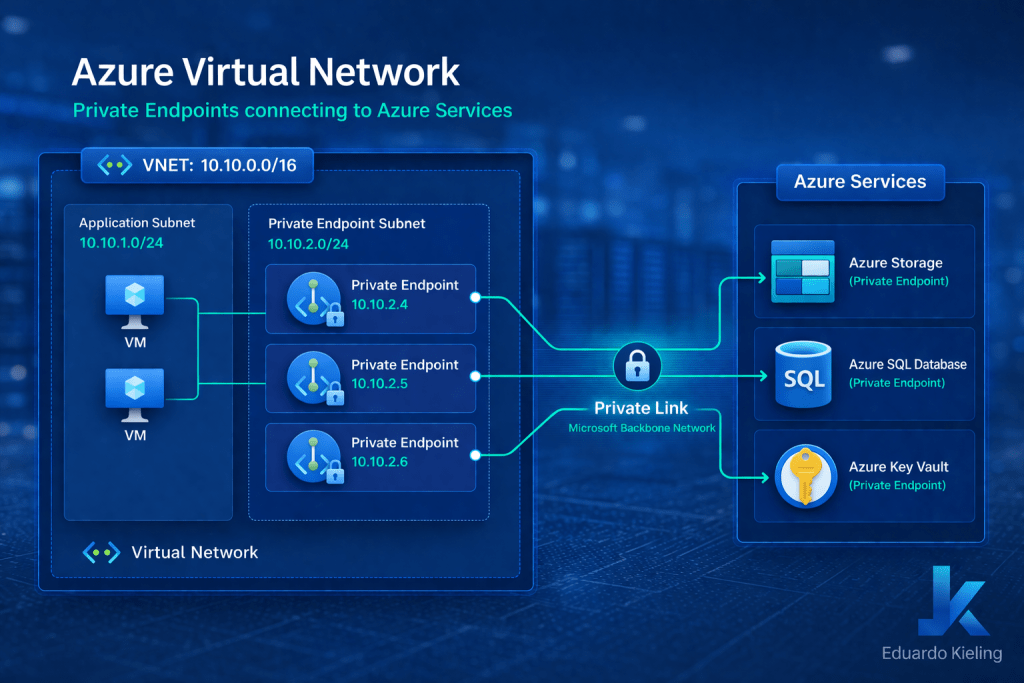
Design patterns for high scale Private Endpoints in Azure

Private connectivity has become a central element of secure cloud architectures. As organizations increasingly adopt platform services in Azure, controlling how those services are accessed from internal workloads becomes an important architectural concern.

Azure Private Endpoints provide a mechanism to expose platform services through private IP addresses within a virtual network. Instead of accessing services through public endpoints, workloads communicate with them privately through the Azure backbone network.

While this capability is straightforward for small environments, designing architectures that support large-scale Private Endpoint deployments introduces additional considerations.

Continue reading “Design patterns for high scale Private Endpoints in Azure”
Azure Firewall prescaling capabilities overview

Hello everyone,

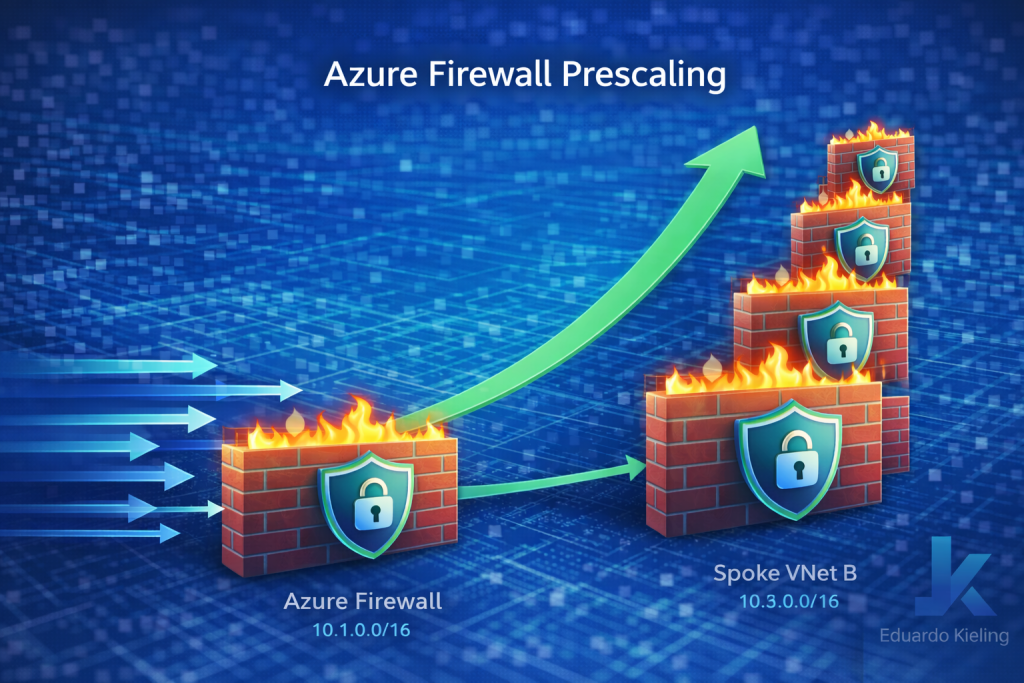
Azure Firewall is widely used as a central security control in many enterprise network architectures. As environments grow and traffic patterns become more dynamic, maintaining predictable performance for inspection and filtering becomes increasingly important.

A recently introduced capability known as Azure Firewall prescaling helps address this challenge by allowing organizations to prepare firewall capacity ahead of expected traffic increases.

Continue reading “Azure Firewall prescaling capabilities overview”

Understanding Azure Spot Placement Score

Hello everyone,

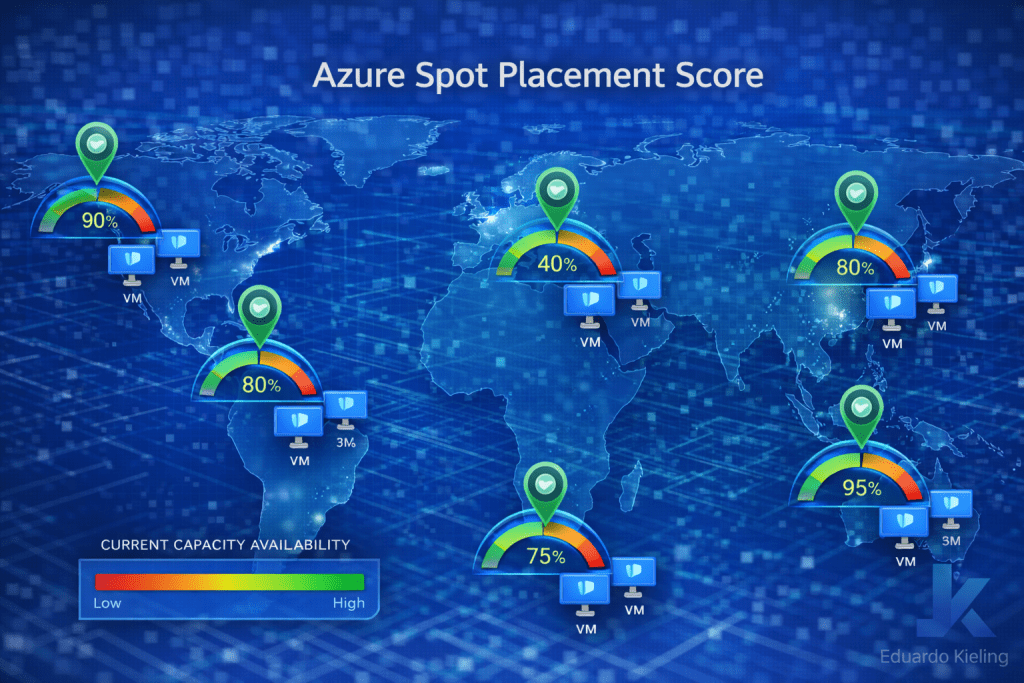
Azure Spot Virtual Machines are widely used to run cost-optimized workloads by leveraging unused Azure compute capacity. While they can significantly reduce infrastructure costs, one of the challenges when working with Spot VMs is understanding where capacity is more likely to be available.

This is where the Azure Spot Placement Score becomes useful.

Continue reading “Understanding Azure Spot Placement Score”