
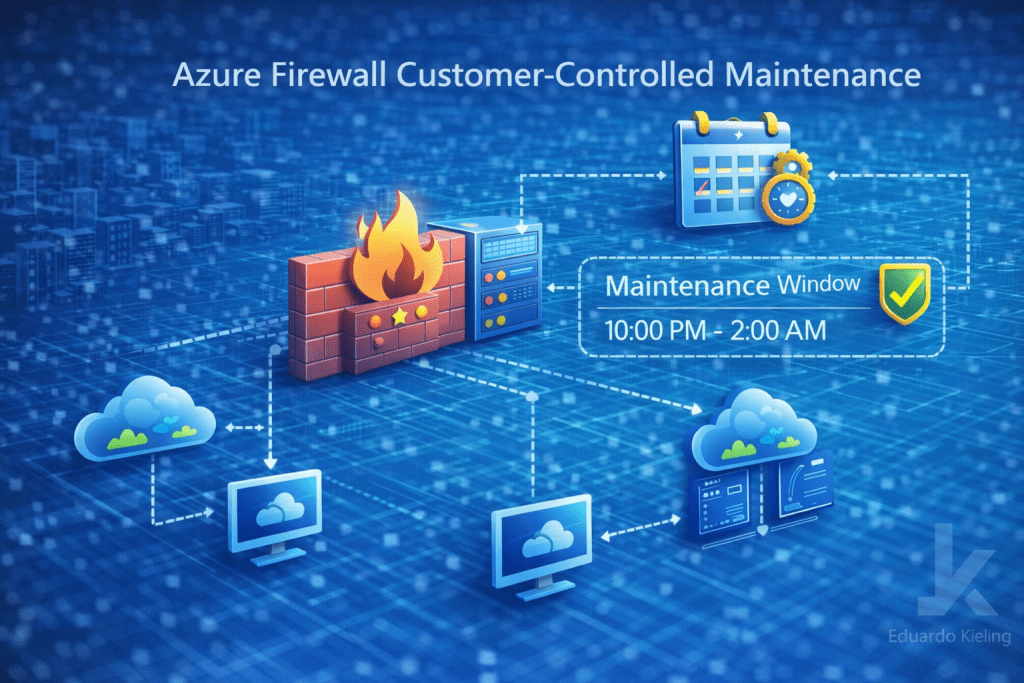
Managing security infrastructure in production environments always requires careful coordination. Network security components such as firewalls sit directly in the data path of critical applications, meaning that even small operational changes must be handled with caution.
Azure has introduced customer-controlled maintenance for Azure Firewall, a capability that gives organizations more control over when maintenance activities and updates are applied.
This improvement can be particularly valuable for enterprises that operate workloads with strict availability requirements.
Why maintenance control matters
Cloud platforms regularly apply updates to improve reliability, performance, and security. While these updates are necessary, they may also introduce operational considerations for production environments.
For organizations running critical workloads, having visibility and control over maintenance windows helps reduce uncertainty and ensures that updates occur during planned operational periods.
This becomes especially important when firewalls are part of highly sensitive network architectures, where any disruption could affect multiple applications or services.
How customer-controlled maintenance works
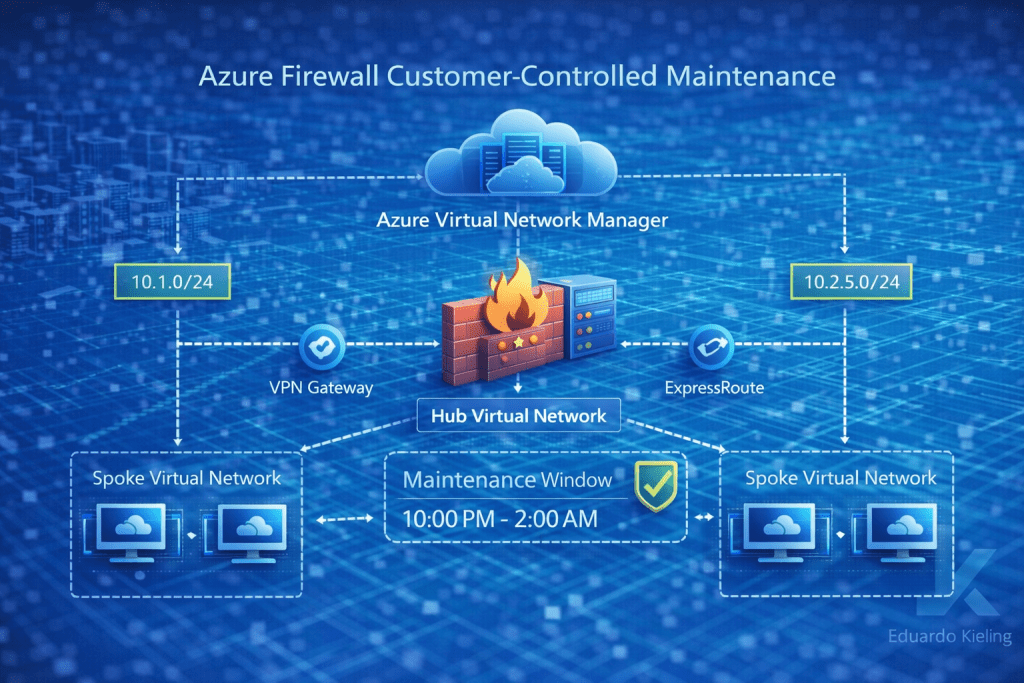
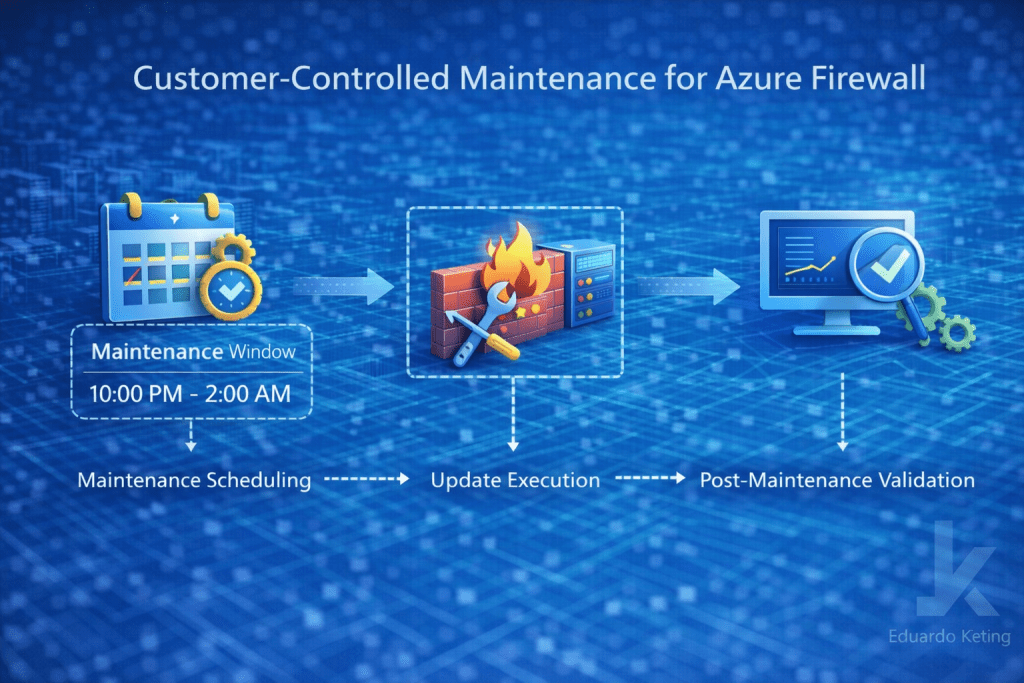
With this capability, administrators can define preferred maintenance windows during which Azure platform updates may occur. Instead of updates happening automatically at any time, they can be aligned with predefined operational schedules.
This allows infrastructure teams to plan around maintenance activities, communicate changes internally, and prepare monitoring or validation procedures if necessary.
Although Azure still manages the platform itself, this model introduces an additional layer of predictability that many organizations require when operating large environments.
Operational advantages for enterprise environments
One of the main benefits of this feature is improved coordination between infrastructure operations and business workloads.
Security teams can align firewall maintenance with existing operational processes, such as scheduled change windows, maintenance weekends, or controlled infrastructure updates.
This helps reduce the risk of unexpected behavior during peak usage periods and allows teams to validate systems after maintenance has been applied.
Architectural considerations
When designing enterprise network architectures, it is important to consider how maintenance activities interact with redundancy and high availability strategies.
For example, environments using hub-and-spoke architectures or multiple firewall instances can benefit from controlled maintenance scheduling combined with resilient network designs.
These approaches help ensure that updates can be applied while maintaining overall service availability.
Final thoughts
Customer-controlled maintenance represents an important operational improvement for organizations running critical workloads on Azure.
By allowing infrastructure teams to define maintenance windows for Azure Firewall updates, this capability introduces greater predictability and better alignment with enterprise operational processes.
For environments where network security infrastructure must remain stable and highly available, having visibility and control over update timing can significantly improve operational confidence.