
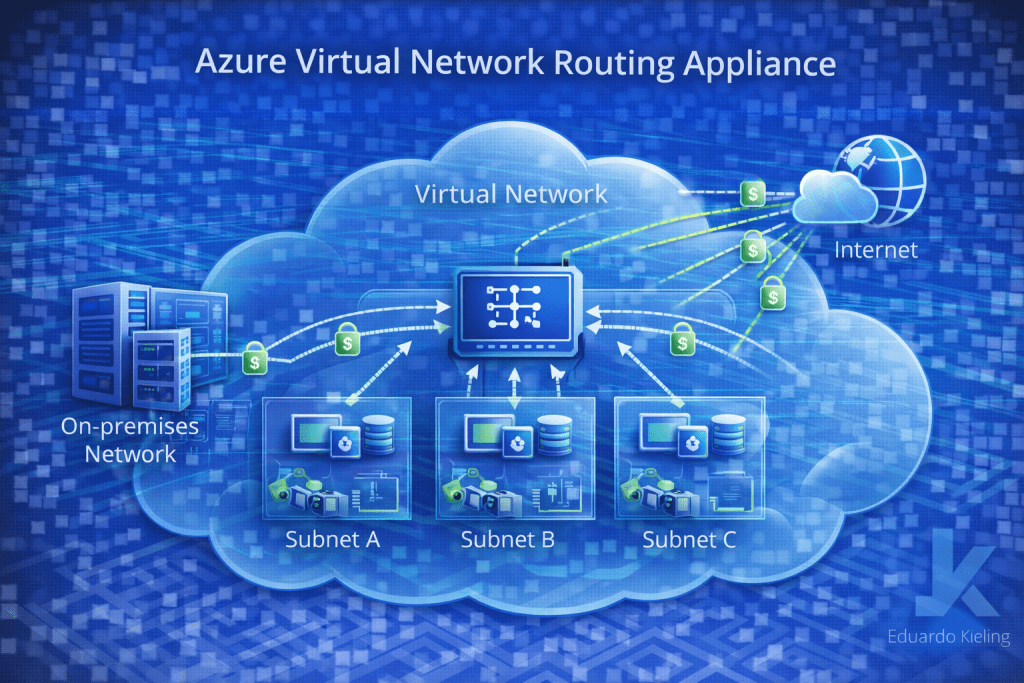
As Azure environments continue to grow in complexity, networking architectures increasingly require more advanced traffic control and routing capabilities. Enterprise environments often integrate multiple connectivity models such as virtual networks, hybrid connectivity, security appliances, and multi-tier application platforms.
The concept of a Virtual Network Routing Appliance in Azure introduces a new way to handle routing behavior inside complex network topologies. It allows architects to define more flexible traffic control patterns while maintaining centralized visibility over how traffic flows between workloads.
Why routing control matters in modern cloud architectures
Large Azure environments rarely consist of a single virtual network. Instead, organizations typically deploy hub-and-spoke architectures, multi-region environments, hybrid connectivity with on-premises infrastructure, and specialized security inspection layers.
In these scenarios, routing decisions become critical.
Traffic may need to pass through security inspection points, be redirected to centralized services, or follow different paths depending on the destination network. Traditional route tables can handle many scenarios, but more advanced environments benefit from dedicated routing appliances capable of managing traffic dynamically.
Understanding the routing appliance concept
The Azure Virtual Network Routing Appliance represents a component that participates directly in the routing logic of the virtual network environment.
Instead of relying solely on static routing rules, the routing appliance can influence how traffic moves between subnets, networks, and external endpoints.

This model allows traffic flows to be centralized through dedicated routing layers where advanced routing policies or inspection logic can be implemented.
Role in advanced enterprise networking
Routing appliances are particularly relevant in environments where centralized network governance is required.
Examples include organizations that implement inspection layers for security monitoring, traffic segmentation between application tiers, or complex routing between multiple regions.
In these environments, routing appliances can act as the control point that determines how traffic flows across the broader architecture.
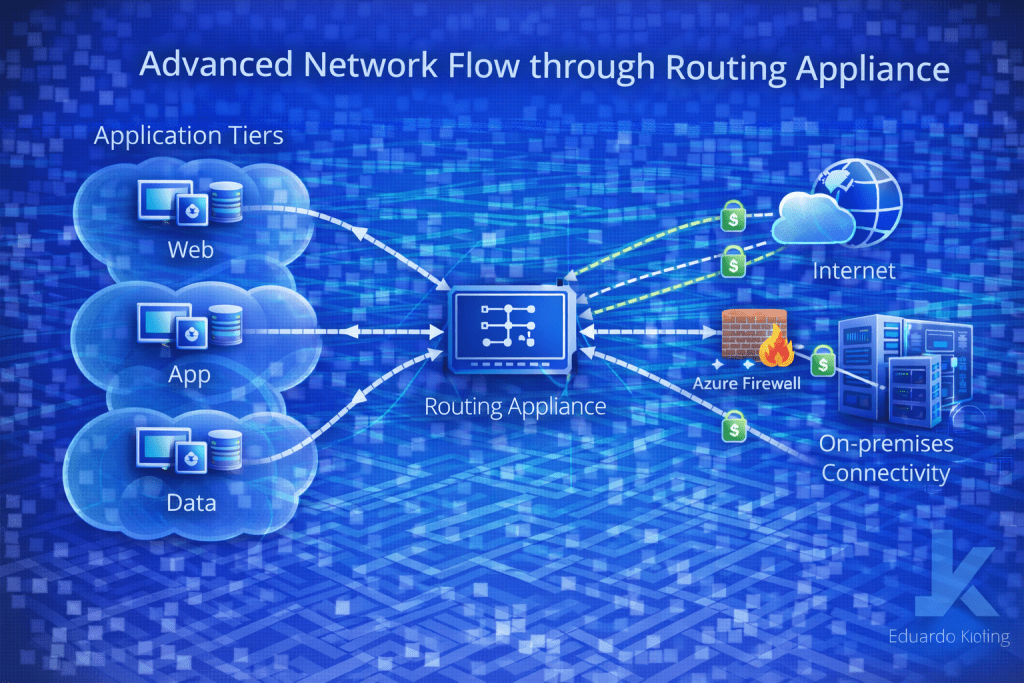
This centralized control model aligns well with enterprise networking practices where routing and inspection layers are separated from the application workloads themselves.
Operational considerations
From an operational standpoint, introducing a routing appliance changes how network administrators design and manage traffic flows.
Monitoring and observability become important factors, since the appliance becomes a key component of the traffic path. Performance characteristics, scaling behavior, and fault tolerance must also be considered when integrating routing appliances into production environments.
Proper placement within the network topology is equally important. In many architectures, routing appliances are positioned within hub virtual networks so that traffic between spoke networks naturally passes through them.
Design implications
Architects evaluating this capability should consider how it fits within broader Azure networking patterns such as hub-and-spoke architectures, hybrid connectivity models, and centralized security controls.
The routing appliance concept can complement existing Azure networking services and may simplify complex traffic engineering scenarios that would otherwise require multiple routing constructs.
Final thoughts
The Azure Virtual Network Routing Appliance introduces an additional layer of flexibility for organizations designing sophisticated network architectures in Azure.
As cloud environments evolve and networking requirements become more advanced, capabilities that provide greater control over traffic flow will continue to play an important role in building scalable and manageable enterprise platforms.