
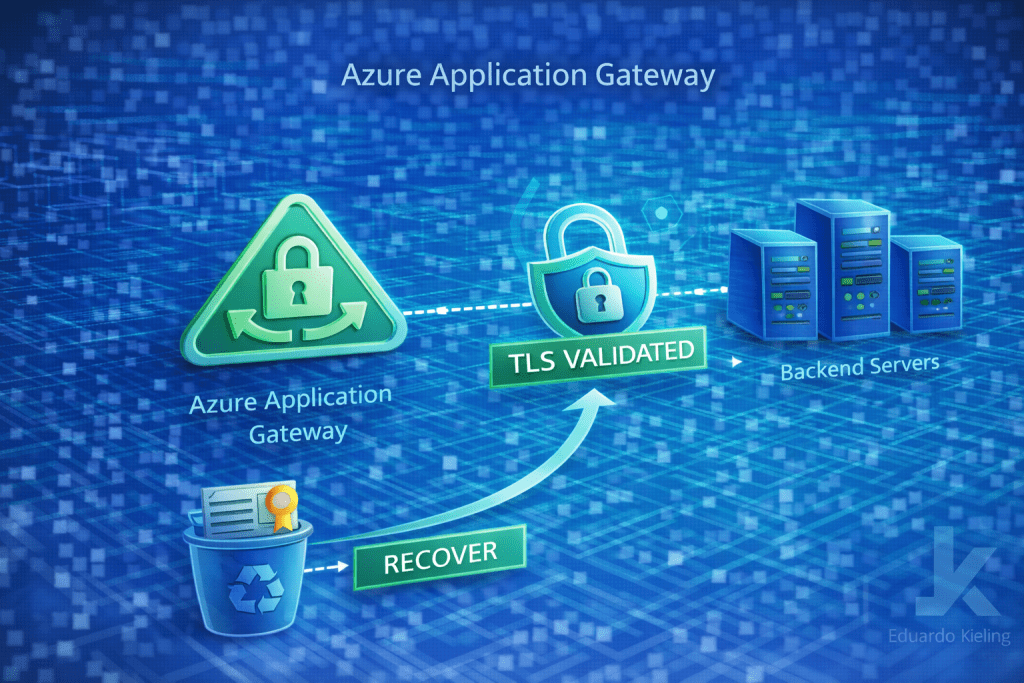
In modern cloud architectures, securing application traffic is not only about protecting the connection between users and the entry point of the application. It is equally important to ensure that communication between application gateways and backend services is also properly validated and encrypted.
Azure Application Gateway provides several capabilities to enforce TLS validation when communicating with backend services. These controls help organizations maintain strong security practices by verifying backend identities and preventing potential man-in-the-middle scenarios.
Understanding backend TLS communication
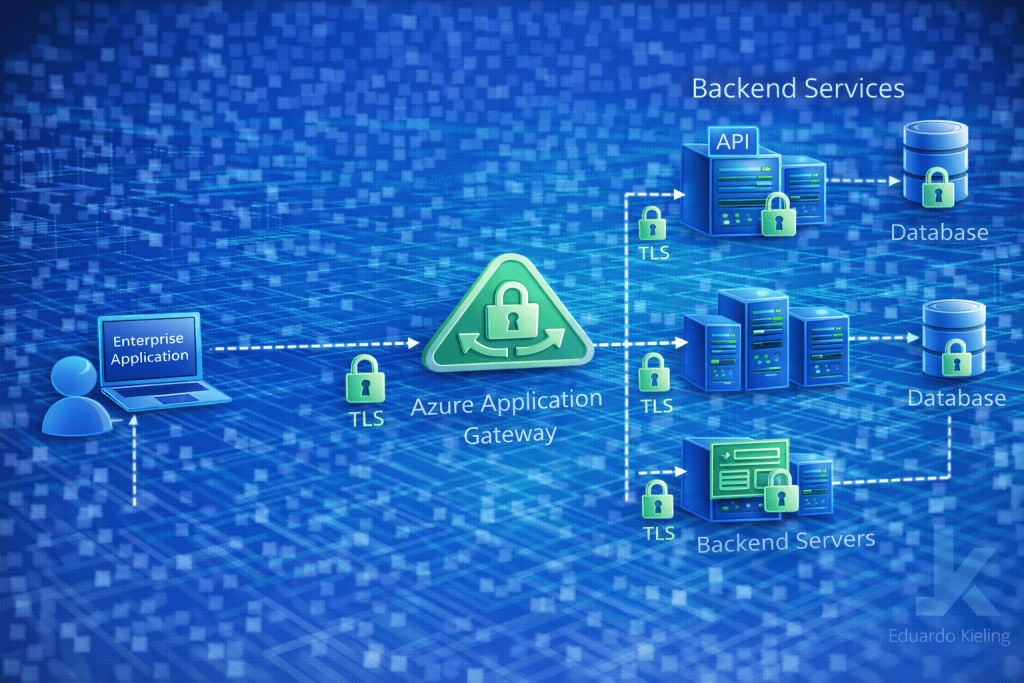
Azure Application Gateway is commonly used as a layer-7 load balancer for web applications. It manages incoming requests and forwards them to backend pools that typically contain virtual machines, containers, or application services.
When HTTPS is used between the gateway and the backend servers, TLS encryption protects the traffic. However, encryption alone is not enough. Proper validation of the backend certificate is necessary to ensure the gateway is communicating with the expected service.
This is where backend TLS validation controls become important.
What backend TLS validation provides
Backend TLS validation allows administrators to configure how the Application Gateway verifies backend certificates. Instead of blindly forwarding encrypted traffic, the gateway can inspect and validate several aspects of the TLS certificate presented by the backend service.
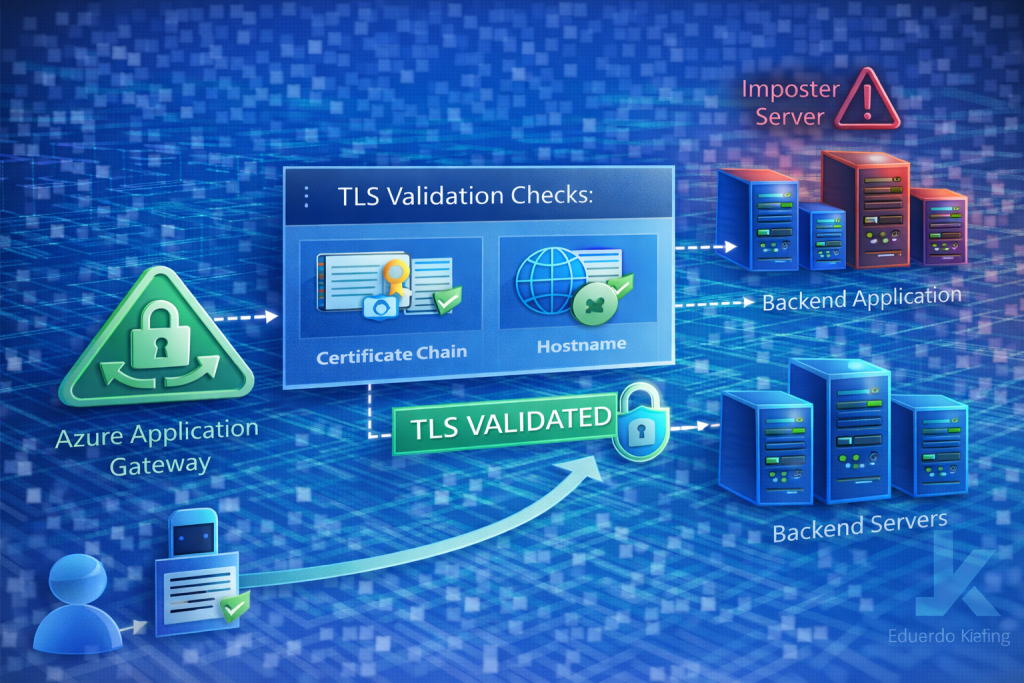
These validation mechanisms typically include checks such as certificate chain verification and hostname validation. By enforcing these checks, the gateway confirms that the backend service is trusted and correctly identified.
This capability is particularly useful in environments where internal services use custom certificates or internal certificate authorities.
Security implications for enterprise environments
In enterprise architectures, Application Gateway often sits at the front of critical application workloads. Ensuring secure communication between the gateway and backend services helps maintain a consistent security posture across the entire application stack.
Without proper validation, a compromised service or misconfigured endpoint could potentially intercept or impersonate backend services.
By enforcing TLS validation, organizations can reduce the risk of misconfigurations and strengthen the integrity of internal application communication.
Operational considerations
When implementing backend TLS validation, administrators should ensure that certificate management practices are properly defined. Backend services must present certificates that align with the expected hostname and trusted certificate chain.
This often involves integrating internal certificate authorities or managing certificate lifecycles carefully across backend workloads.
Automation and monitoring also become important to avoid service interruptions caused by expired or incorrectly configured certificates.
Final thoughts
Backend TLS validation in Azure Application Gateway adds an important security control to application delivery architectures.
By ensuring that encrypted connections to backend services are also properly validated, organizations can strengthen their security posture and reduce risks associated with certificate misconfiguration or service impersonation.
For cloud architects designing secure application platforms in Azure, understanding and implementing these validation controls is an important step toward building resilient and trustworthy environments.